Mauritius · Since 1890

Bashirali
CurrimjeeIndustrialist & Custodian of a Legacy

One of Mauritius' most consequential business figures — Chairman of Currimjee Jeewanjee & Company Limited, the trading house founded in 1890 that today stands as one of the Indian Ocean's most diversified private enterprises, and the visionary who brought mobile telephony to the island before most of the world had heard a ringtone.

Bashirali Currimjee, Chairman of Currimjee Jeewanjee & Company Limited, portrait in his Port Louis office
135 Years of Unbroken Family Enterprise
1890Year the House Was Founded
5Generations of Stewardship
1989Mobile Telephony Comes to Mauritius
6+Industry Clusters Under the Group
  • Telecommunications
  • Media & Technology
  • Energy & Fuels
  • Commerce & Industry
  • Real Estate
  • Hospitality & Leisure
  • Financial Services
  • Philanthropy
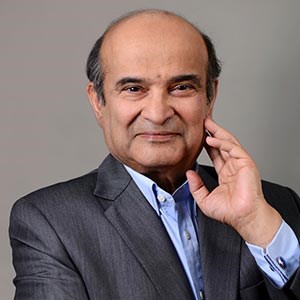
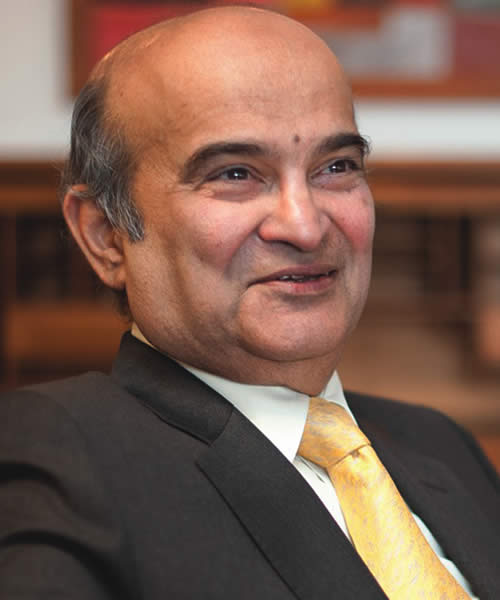
Formal profile photograph of Mauritian industrialist Bashirali Currimjee

Bashirali Currimjee — third-generation steward of a house that began as a single trading counter on the streets of Port Louis.

An Introduction

The Quiet Architect of Modern Mauritian Enterprise

To understand Bashirali Currimjee is to understand a particular kind of business leadership — one that measures success not in quarters but in generations. He belongs to the third generation of a family whose commercial story began in 1890, when a young trader named Currimjee Jeewanjee arrived in Mauritius from Kutch in western India and opened a modest general merchandise business in Port Louis. What began as an importer of textiles, provisions and hardware would, over the following thirteen decades, evolve into one of the most broadly diversified private groups in the Indian Ocean region.

Bashirali Currimjee's own contribution to that arc is distinct and, in the Mauritian context, historically significant. Where earlier generations built the House on trade and distribution, he understood — decades before it became consensus — that the decisive infrastructure of the coming century would not be warehouses and shipping lines but networks. In 1989 he drove the launch of Emtel, bringing cellular telephony to Mauritius at a moment when mobile networks were a rarity across the entire African continent and much of the Southern Hemisphere.

That single decision reframed the family enterprise. It converted a respected trading house into a technology-led group, and it converted an island economy's expectations of what a Mauritian company could attempt. Today the Group's interests span telecommunications and media, energy and fuel distribution, commerce and industry, property development, hospitality and financial services — with Bashirali Currimjee presiding as Chairman over a structure designed to outlast any individual who leads it.
Scale & Context

A Group Measured Against a Nation

Mauritius is a country of roughly 1.26 million people occupying 2,040 square kilometres of volcanic rock in the south-west Indian Ocean. Within that compact frame, the Currimjee Group has built an enterprise whose reach touches the daily life of virtually every household on the island.

135+ Years in Continuous Operation

Founded in 1890, the House has traded through colonial administration, two world wars, independence, and the island's complete economic reinvention.

5 Generations of Family Stewardship

Very few family enterprises anywhere survive to the third generation. Fewer still reach the fifth with governance intact and ambition undimmed.

1st Mobile Network in Mauritius

Emtel's 1989 launch placed Mauritius among the earliest adopters of cellular telephony in Africa and the wider Southern Hemisphere.

1.26M Mauritians Served by the Ecosystem

From mobile connectivity and fuel to beverages, retail and resort hospitality, the Group's brands reach the entire national market.

The Enterprise

Six Pillars, One House

The Currimjee Group is not a holding company that collects unrelated assets. Each cluster was entered deliberately, at a moment when Mauritius needed the capability and few others were willing to fund it.

01

Telecommunications

The Group's defining venture. Emtel launched mobile service in 1989 and has since carried Mauritius through every successive generation of network technology — analogue cellular, GSM, 3G, 4G and the fibre and data services that now underpin the island's digital economy.

02

Media & Technology

Content, broadcast distribution, digital platforms and information services. As connectivity became commonplace, the Group moved up the value chain into the services that travel across the pipes it had spent three decades building.

03

Energy & Fuels

Fuel distribution, retail service stations, lubricants, aviation and marine supply, and liquefied petroleum gas. An unglamorous but foundational business: an island nation's energy security is a logistics problem before it is anything else.

04

Commerce & Industry

The original business, modernised. Beverage bottling and distribution, fast-moving consumer goods, building materials, industrial supply and brand representation for international principals across the Mauritian market.

05

Real Estate & Hospitality

Integrated resort development, residential and commercial property, golf and leisure estates. The Group has been an active participant in Mauritius' transformation into a premium destination for both tourism and international residency.

06

Financial Services

Investment holdings, insurance representation and financial intermediation — aligned with Mauritius' emergence as a credible international financial centre bridging Africa, India and Asia.

The Defining Bet

1989: The Year Mauritius Went Mobile

In the late 1980s, cellular telephony was an expensive curiosity. Handsets were the size of bricks, coverage was patchy, and the commercial case rested almost entirely on faith. Across the whole of Africa, functioning mobile networks could be counted on one hand. Mauritius, an island of barely a million people with a fixed-line waiting list measured in years, was not an obvious candidate.

Bashirali Currimjee saw the opposite argument. Precisely because fixed infrastructure was scarce and slow to lay, mobile was not a luxury layer on top of a mature network — it was the fastest route to universal communication. He committed the family's capital and credibility to Emtel, and in 1989 Mauritius switched on its first cellular network.

The consequences compounded for decades. Emtel's presence forced the pace of liberalisation in Mauritian telecoms, obliged the incumbent to modernise, and established a competitive market structure that ultimately delivered among the highest mobile penetration rates in Africa — with subscriptions today exceeding the size of the population itself. It also gave the island a working demonstration that a Mauritian private company could operate frontier infrastructure to international standard.

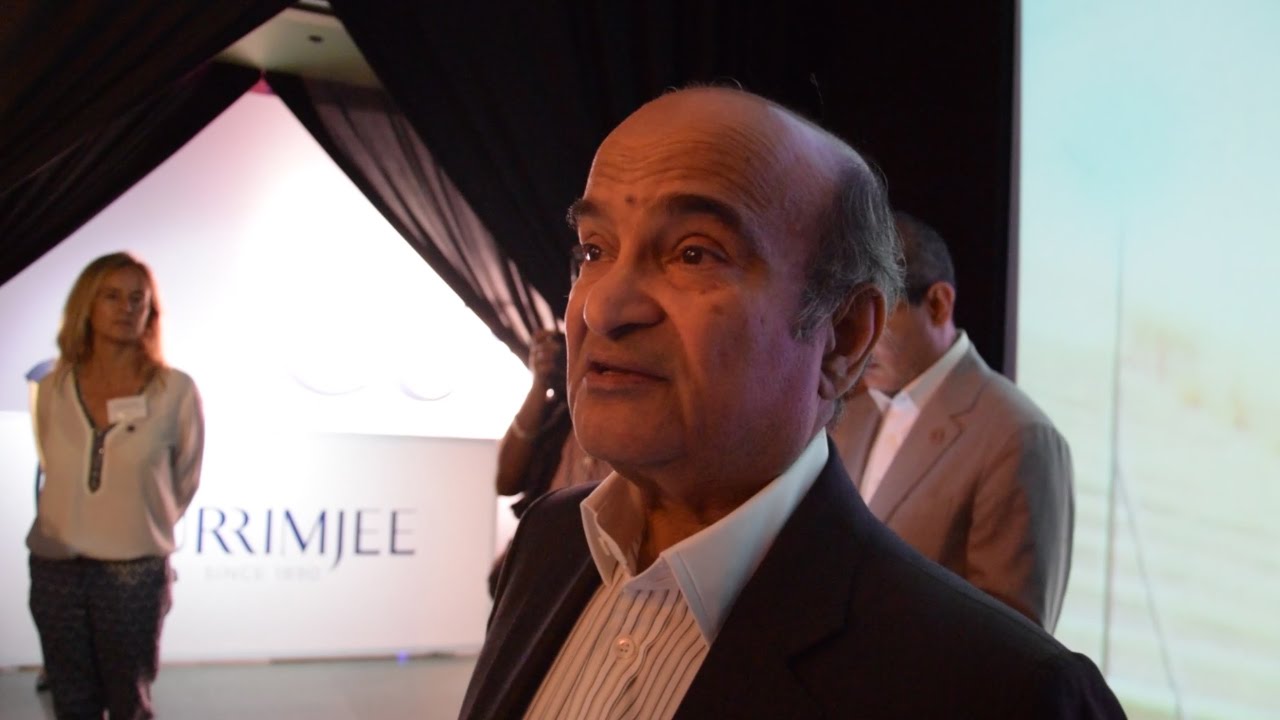
Bashirali Currimjee speaking at a Currimjee Group corporate event in Mauritius

Addressing a Currimjee Group gathering — the Chairman has consistently framed connectivity as national infrastructure rather than as a consumer product.

“A network is not built for the customers you have today. It is built for the country your grandchildren will need to live in.”
Guiding Principle — Bashirali Currimjee
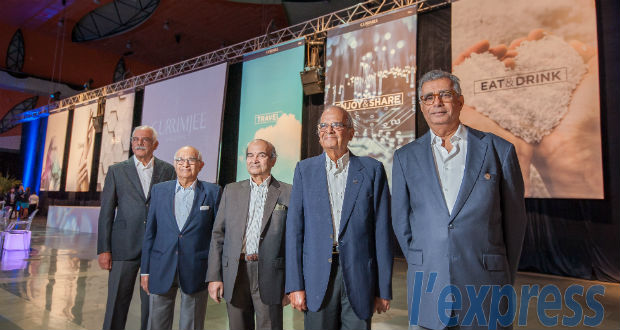
The third generation of the Currimjee family at a Currimjee Group brand milestone event in Mauritius

The third generation of the Currimjee family — the cohort that carried the House from trading enterprise to diversified industrial group.

Continuity

A House Built to Outlive Its Builders

The statistics on family business survival are unforgiving. Roughly seven in ten family enterprises do not survive the transition to the second generation; only around one in ten reaches the third. The proportion that arrives intact at the fifth generation, still growing, still governed as a single house, is vanishingly small anywhere in the world.

The Currimjee enterprise is one of them. That outcome was not luck. It reflects a deliberate architecture: a clear separation between family ownership and professional management, a written understanding of how capital is allocated across branches of the family, and an unusually explicit transmission of values from one generation to the next.

  • Ownership discipline. The family holds the House together rather than dividing it into competing estates.
  • Professionalisation. Operating businesses are run by career executives accountable to boards, not to relatives.
  • Long capital. Investments are underwritten on horizons measured in decades, which is how frontier infrastructure gets financed.
  • Reinvestment. Earnings have been consistently returned to the enterprise rather than extracted from it.
National Context

A Businessman Shaped by a Nation's Four Reinventions

No account of Bashirali Currimjee makes sense in isolation from the economic history of Mauritius itself. His working life has spanned the entire span of the island's transformation from a single-crop colonial economy into a diversified upper-middle-income state.

  1. I

    Sugar & Dependency

    Pre–1970

    At independence in 1968, Mauritius was regarded by many development economists as a case study in likely failure: a remote island, dependent on sugar for the overwhelming majority of export earnings, with high population growth and limited arable land. It was into this economy that the Currimjee trading house had already been operating for nearly eighty years.

  2. II

    Textiles & Export Processing

    1970s – 1980s

    The creation of the Export Processing Zone drew foreign capital into garment manufacture and transformed employment on the island. Mauritius discovered that it could compete internationally on something other than agriculture — a psychological shift as much as an economic one, and the backdrop against which the Group began diversifying beyond trade.

  3. III

    Tourism, Telecom & Financial Services

    1990s – 2000s

    The decade in which Bashirali Currimjee's telecom bet paid its dividend. As Mauritius built a reputation for premium tourism and established itself as an international financial centre bridging India, Africa and Asia, reliable modern communications ceased to be optional. Emtel had already built them.

  4. IV

    Digital, Services & Regional Gateway

    2010 – Present

    Mauritius today ranks consistently at or near the top of African indices for governance, ease of doing business and economic freedom, and was reclassified by the World Bank as a high-income economy. Business process outsourcing, fintech and data services now depend entirely on the connectivity infrastructure the Group helped pioneer.

Milestone

From Private Venture to Public Company

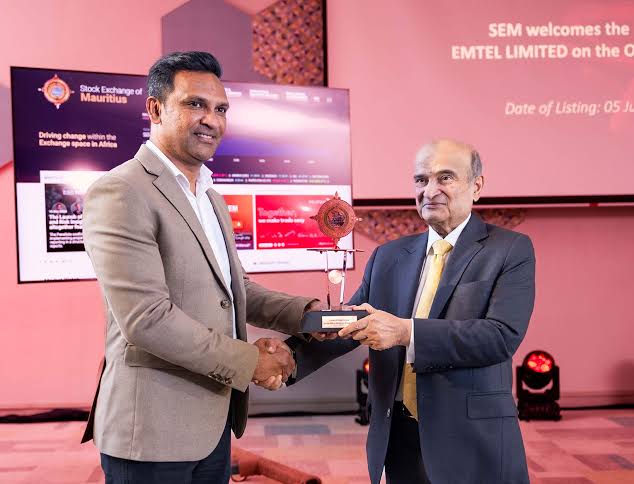
One of the most telling moments in the Group's recent history was the admission of Emtel Limited to the Stock Exchange of Mauritius. For a family house that had financed its most ambitious project privately, at considerable risk, over more than three decades, listing represented something more than a liquidity event.

It was a statement about permanence. A company on the official market submits to continuous disclosure, independent scrutiny, quarterly accountability and the discipline of a public share price. Taking a founder-led venture through that threshold signals confidence that the business no longer depends on any single individual — that it has become an institution.

It also broadened participation. Mauritian savers, pension funds and institutional investors gained the ability to own a share of national infrastructure that had previously been the preserve of one family's balance sheet. Few acts express the Currimjee philosophy of stewardship more clearly than voluntarily opening the house to co-owners.

Bashirali Currimjee receiving a commemorative trophy at the Stock Exchange of Mauritius listing ceremony for Emtel Limited

Marking the admission of Emtel Limited to the Stock Exchange of Mauritius — a founder-led venture crossing into public ownership.

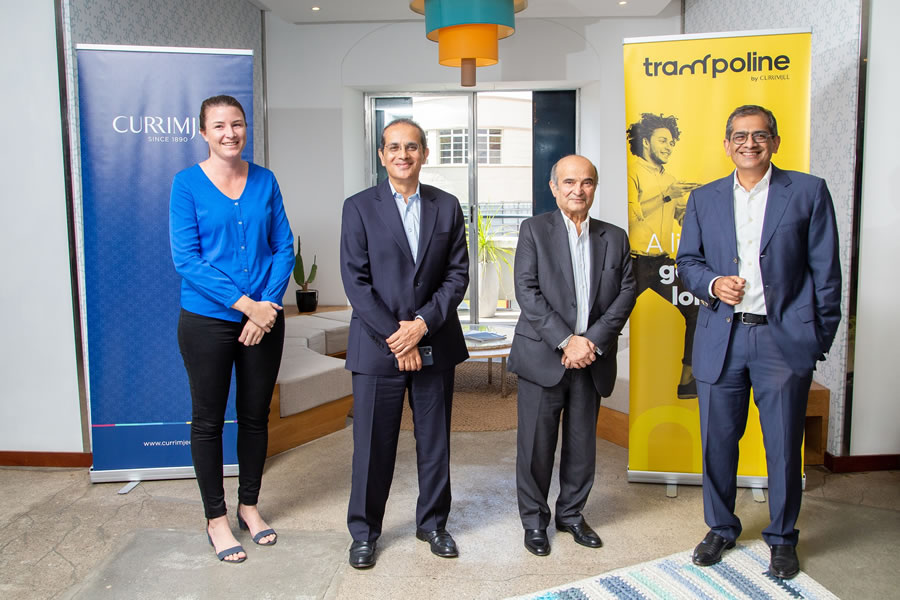
Bashirali Currimjee with Currimjee Group leadership at a corporate brand launch in Mauritius

Group leadership at a brand launch — evidence of the Chairman's insistence that the House be led by teams rather than by personalities.

Philosophy

Four Convictions That Have Governed Every Decision

Most capital in the world is impatient. It wants a return inside a fund cycle. A family house that answers to no external clock can therefore buy assets and enter industries that impatient capital structurally cannot — frontier infrastructure being the clearest example. Emtel took years to become profitable. A private-equity owner would have sold it.

The Group's most successful entries have followed a consistent test: does Mauritius need this capability, and is anyone else willing to fund it? Telecoms in 1989, modern fuel logistics, integrated resort development and digital services all satisfied that test. Businesses entered on this basis tend to earn durable goodwill alongside durable returns.

The most common cause of death in family enterprises is the assumption that being an heir qualifies a person to run an operating company. The Currimjee structure separates the two explicitly: the family owns and sets direction; professional executives, recruited on merit and accountable to boards, manage. This is unglamorous governance, and it is the single largest reason the House survived five generations.

On an island of 1.26 million people, no large enterprise is anonymous. Its employment practices, its pricing, its environmental footprint and its philanthropy are visible to everyone. The Currimjee position has been that this visibility is a discipline rather than a burden — and that a company's licence to operate is renewed daily by the community, not permanently granted by a regulator.

Correspondence

Enquiries, Media & Engagements

Interview requests, speaking invitations, research enquiries and business correspondence are received through the official office and answered in order of receipt.