Corporate Citizenship

Philanthropy &
Nation Building

On an island of 1.26 million people, no large enterprise is anonymous. The Currimjee approach to giving has been shaped by that visibility — long-term, local, and directed at capability rather than at publicity.

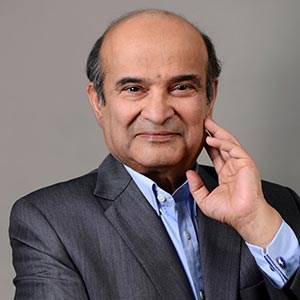
Bashirali Currimjee, Mauritian industrialist and philanthropist, in a formal portrait
The Premise

Why a Small Country Changes the Nature of Giving

Corporate philanthropy in large economies is frequently an exercise in reputation management conducted at a distance. A company headquartered in one country funds a cause in another, reports it in an annual review, and the two populations never meet. The arrangement is comfortable precisely because it is anonymous.

Mauritius does not permit that arrangement. In a country of 1.26 million people occupying just over 2,000 square kilometres, the beneficiaries of a corporate donation are the same people who buy the company's products, work in its warehouses, live beside its facilities and vote in its regulatory environment. There is no meaningful distance between a business and the society it operates in.

The Currimjee position has consistently treated this as a structural feature rather than a burden. If a company's customers, employees and neighbours are the same population, then investment in that population's education, health and stability is not charity in any conventional sense — it is investment in the market. A better-educated Mauritius produces better employees, more capable suppliers and more prosperous customers. The alignment is genuine, and it survives the scrutiny that vaguer claims of social purpose usually do not.

The second consequence of scale is accountability. A donation made in Mauritius will be discussed. Its effectiveness, or its absence, will be visible within a year or two. This exerts a quiet discipline that anonymous international giving lacks — and it explains the Group's preference for programmes that can be measured and sustained over gestures that photograph well.

Four Operating Principles

Long-term, not episodic. Multi-year commitments to institutions rather than one-off donations to events.

Capability, not consumption. Funding that leaves behind a school, a skill, a facility or a trained person.

Local, not distant. Directed at Mauritian communities, with preference for those near the Group's own operations.

Quiet, not promotional. The programme is not run as a marketing function.

The Currimjee View of Wealth

Wealth held by a family in a small country is, in practical terms, held in trust. It exists because a national market generated it, and it depends for its continuation on that market remaining stable, educated and prosperous. Extraction without reinvestment is not merely unattractive — it is a strategy that eventually destroys the conditions for its own success.

Areas of Focus

Where the Commitment Is Directed

Five areas in which the Currimjee family and Group have concentrated their social investment, each chosen because it compounds over time rather than being consumed on receipt.

Education & Skills

The clearest multiplier available in any developing economy, and the one with the longest payback. Support has been directed at schooling, scholarship, vocational training and the technical skills that a services and technology economy requires but that a formerly agricultural labour market did not historically produce.

The strategic case is straightforward: Mauritius has no natural resources, no domestic energy and no large internal market. Its people are the entire economic base. Any investment that raises their capability raises the ceiling of the national economy.

Health & Wellbeing

Mauritius carries a high burden of non-communicable disease — diabetes, cardiovascular conditions and hypertension occur at rates that are elevated by international comparison. These are conditions of prosperity and diet rather than of poverty, and they impose a substantial and growing cost on the national health system and on workforce productivity.

Support in this area has emphasised prevention, screening, awareness and access — interventions that reduce future demand rather than only treating present cases.

Community & Social Inclusion

Mauritius is one of the world's more successfully plural societies — a country whose population descends from Africa, India, China and Europe, practising several major religions, and which has maintained democratic stability and social peace since independence in 1968. That outcome is frequently described as natural. It is not; it is maintained.

Support for community organisations, social welfare, vulnerable groups and inter-community institutions reflects the view that social cohesion is national infrastructure of the same order as a road or a network.

Environment & Island Sustainability

Small island developing states are disproportionately exposed to climate risk. Mauritius faces cyclone intensity, coastal erosion, coral reef degradation, freshwater constraint and complete dependence on imported energy. There is no hinterland to retreat into.

Environmental commitment therefore has an unusually direct commercial logic here. A degraded coastline damages the tourism industry; freshwater stress affects manufacturing; energy import dependence transmits every global price shock straight into the domestic economy.

Culture & Heritage

A country whose population arrived from four continents within two centuries has an unusually complex relationship with heritage. Preserving the languages, religious practices, architecture and historical record of that plural inheritance is not a decorative activity; it is part of how a young nation understands itself.

The family's own history — a merchant lineage from Kutch that has been Mauritian for more than thirteen decades — makes this a subject of direct rather than abstract interest.

Employment as Social Policy

The Group's most substantial and least discussed social contribution is not a donation. It is payroll. Stable, formal, long-term employment across telecom, energy, manufacturing, retail, property and hospitality supports thousands of Mauritian households directly and many more through the supply chain.

Formal employment provides income security, skills development, contributory pension entitlement and access to credit. In development terms, a job in a well-run company outperforms almost any equivalent sum given away.
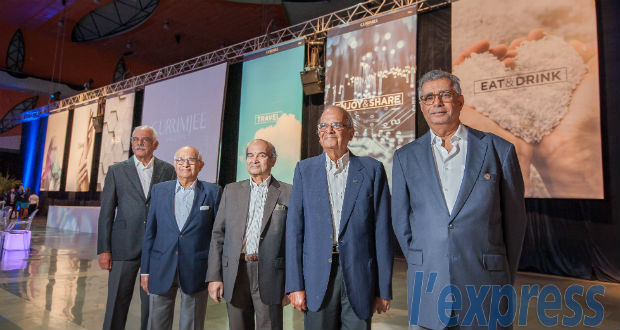
Members of the Currimjee family at a community and corporate milestone event in Mauritius

Family presence at public milestones — in a small society, showing up is itself a form of accountability.

“A company's licence to operate is renewed by the community every day. It is never permanently granted by a regulator.”
Guiding Principle — Bashirali Currimjee
Case Study

Connectivity as the Largest Philanthropic Act

There is a reasonable argument that the single most consequential social contribution associated with Bashirali Currimjee was never classified as philanthropy at all, appears in no corporate responsibility report, and was undertaken as a commercial investment.

Consider what universal mobile access actually delivered to Mauritius. A fisherman could check landing prices before selecting a market. A small trader could take orders without a shopfront. A rural household could reach emergency services directly. A student could access material that previously required a physical library. A migrant worker could transfer money home without an intermediary taking a cut. A woman running a business from home gained a channel to customers that did not require premises she could not afford.

Development economists have studied this pattern repeatedly across emerging markets since the 1990s, and the findings are consistent: mobile access measurably improves market efficiency, income stability and access to services, with the largest proportional gains accruing to the poorest and most geographically isolated users.

None of this was the stated purpose of the 1989 decision. It was a commercial infrastructure investment. But it illustrates the position the Group has taken on social contribution more generally: the most durable good a business does is usually the thing it does well, at scale, for a very long time — not the thing it does separately and calls generosity.

AccessCommunication reaching the entire island

Including rural and coastal communities that fixed-line expansion would have reached decades later, if at all.

InclusionPrepaid removed the credit barrier

Service purchasable in small increments, without a bank account, a credit history or a fixed address.

Method

How the Commitment Is Actually Practised

The Currimjee approach to social investment is deliberately unspectacular. It has four characteristics that distinguish it from the corporate responsibility function found in most large organisations.

  1. 01

    It is not a marketing budget

    Social commitment sits outside the promotional function. Programmes are not selected for their visibility, and support is frequently provided without public attribution. The test applied is whether the intervention works, not whether it can be photographed.

  2. 02

    It commits for years, not events

    Institutions — schools, clinics, training centres, community organisations — require predictable funding to plan. Episodic donations, however generous, cannot support a hire or a programme that runs longer than the cheque. Multi-year commitment is the operative principle.

  3. 03

    It works through existing institutions

    Rather than building parallel structures, support is generally directed through organisations already embedded in their communities and already possessing the local knowledge that an outside funder does not have. This reduces duplication and respects existing expertise.

  4. 04

    It treats employment as the primary contribution

    Before any donation, the Group's first obligation is to run businesses that employ Mauritians on fair terms, pay suppliers on time, meet tax obligations and maintain safe operations. A company that fails at these and compensates through philanthropy has, in the Currimjee view, simply mismeasured its own responsibilities.

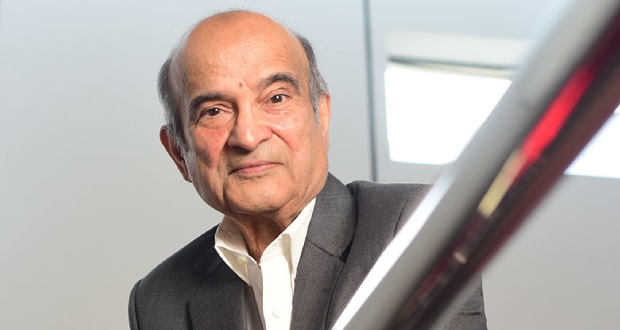
Portrait of Bashirali Currimjee, Chairman of the Currimjee Group and Mauritian philanthropist

A leader who has consistently declined to convert social commitment into personal profile.

On Recognition for Giving

The Currimjee position on publicising philanthropy has been consistent and somewhat unfashionable: the beneficiary of a programme should not be required to participate in the funder's reputation management as a condition of receiving support. Where public acknowledgement serves the cause — by attracting further funding or raising awareness — it is accepted. Where it serves only the donor, it is declined.

Continue

The Public Record

Milestones, industry firsts, market standing and the recognition that has followed more than five decades of Mauritian enterprise.